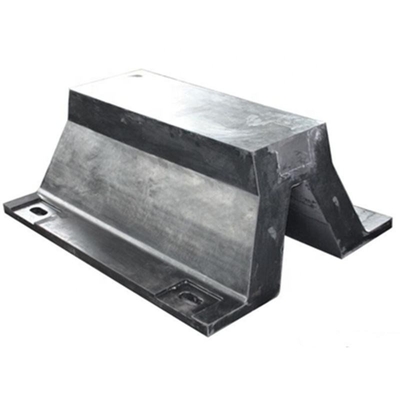
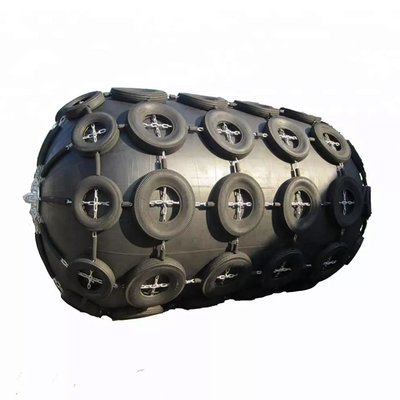
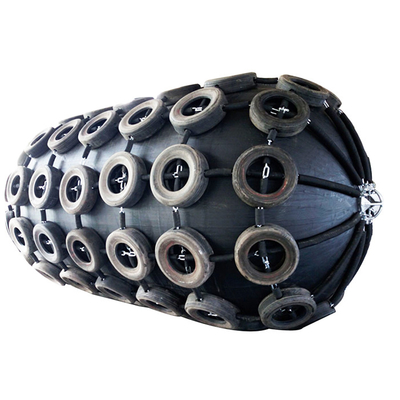
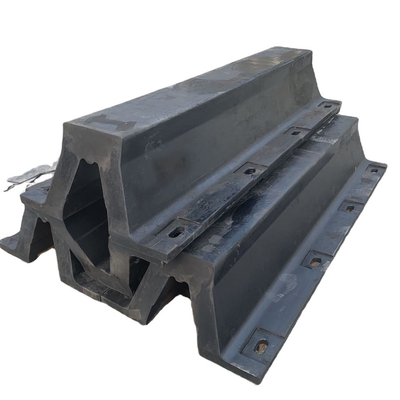
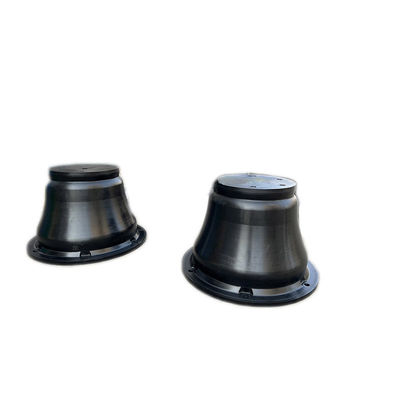
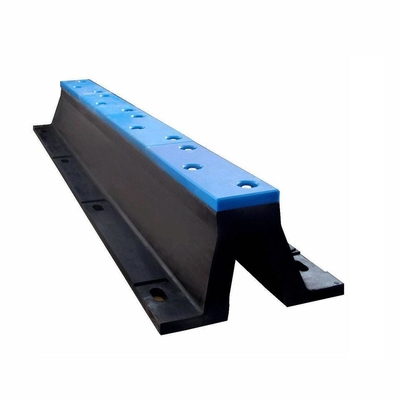
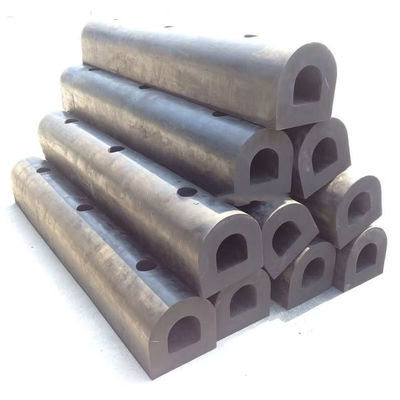
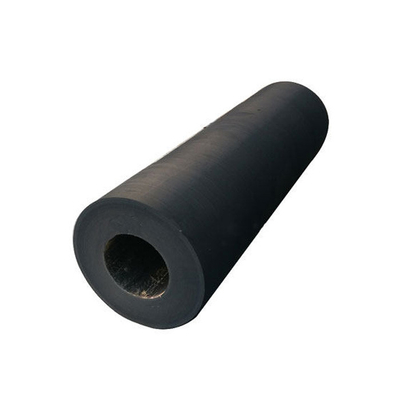
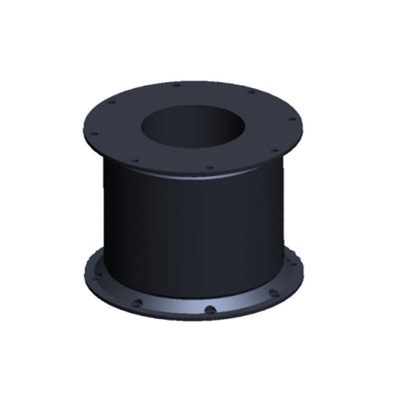
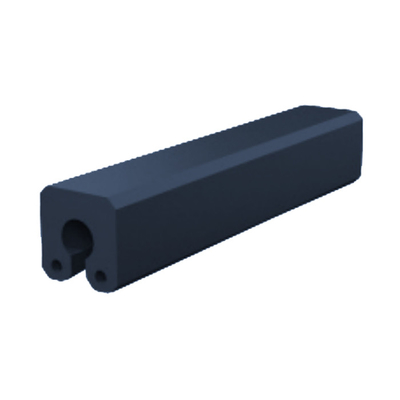
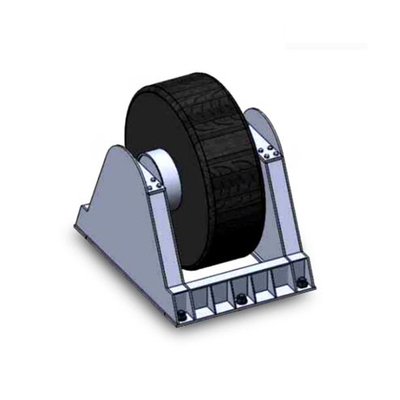
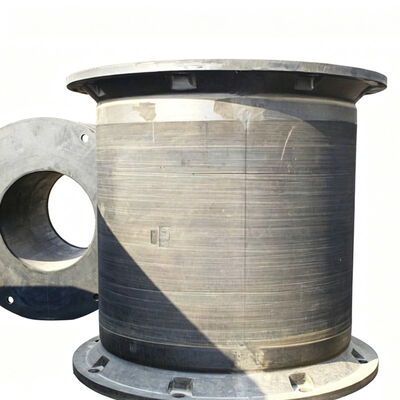
Cell Rubber Fender is a heavy-duty marine berthing protection system designed for high-energy absorption applications in modern ports, terminals, and offshore structures. It consists of a robust cylindrical rubber body combined with a reinforced steel frontal panel and ultra-high molecular weight polyethylene (UHMW-PE) face pads.
Manufactured using high-grade natural rubber and synthetic compounds, the system delivers excellent mechanical strength, elasticity, and long-term durability. It is engineered to withstand continuous impact loading, compression cycles, and harsh marine environments including saltwater corrosion, UV exposure, and temperature variations.
A large deep-water coal terminal in South America experienced increasing operational risks due to the expansion of vessel sizes, with bulk carriers exceeding 180,000 DWT frequently docking at the facility. The existing fender system was unable to cope with higher impact energy, resulting in structural stress on the quay wall and increased maintenance costs.
Hongruntong Marine provided a customized Cell Rubber Fender solution specifically engineered for high-energy bulk cargo operations. After implementation, the terminal achieved a significant improvement in operational safety, reducing structural stress on the quay by more than 35% and eliminating vessel damage incidents.
| Product Name | Cell Rubber Fender |
|---|---|
| Brand Name | Hongruntong Marine |
| Material | High Quality Natural Rubber |
| Reaction Force | 29-4626KN |
| Energy Absorption | 4-6102KNM |
| Hardness | ≤82 Shore A |
| Standard | PIANC2002, HGT2866-2016 |
| Processing Service | Moulding, Cutting |
| Lifespan | 15-20 Years |
| Service | OEM or ODM |
| Features | Strong, Robust, Well Proven Design |
| Application | Port, Dock, Quay, etc |
| Model | H [mm] | h [mm] | D1 [mm] | D2 [mm] | n-t [mm] |
|---|---|---|---|---|---|
| CF-C400H | 400 | 25 | 650 | 550 | 30 |
| CF-C500H | 500 | 25 | 650 | 550 | 32 |
| CF-C630H | 630 | 30 | 840 | 700 | 39 |
| CF-C800H | 800 | 30 | 1050 | 900 | 40 |
| CF-C1000H | 1000 | 35 | 1300 | 1100 | 47 |
| CF-C1150H | 1150 | 40 | 1500 | 1300 | 50 |
| CF-C1250H | 1250 | 45 | 1650 | 1450 | 53 |
| CF-C1450H | 1450 | 47 | 1850 | 1650 | 61 |
| CF-C1600H | 1600 | 50 | 2000 | 1800 | 61 |
| CF-C1700H | 1700 | 55 | 2100 | 1900 | 66 |
| CF-C2000H | 2000 | 55 | 2200 | 2000 | 74 |
| CF-C2250H | 2250 | 60 | 2550 | 2300 | 74 |
| CF-C2500H | 2500 | 70 | 2950 | 2700 | 90 |
| CF-C3000H | 3000 | 75 | 3350 | 3150 | 90 |
Cell Rubber Fenders are engineered to handle extremely high berthing energies generated by large vessels such as bulk carriers, container ships, and LNG tankers. The cylindrical cell structure allows controlled deformation under pressure, converting kinetic energy into elastic energy efficiently.
The rubber formulation used in Cell Rubber Fenders is developed using a carefully controlled mix of natural rubber and synthetic elastomers. This ensures excellent resistance to compression set, fatigue cracking, and environmental degradation.
The integration of a steel frontal panel significantly enhances load distribution across the fender system. This design minimizes localized stress concentrations on both the fender and quay wall, reducing the risk of structural damage.
Each Cell Rubber Fender system can be fully customized based on project-specific requirements, including energy absorption capacity, size, mounting configuration, and environmental conditions.
They are suitable for a wide range of vessels, including container ships, bulk carriers, tankers, and LNG vessels, especially those requiring high-energy berthing protection.
Energy absorption is determined based on vessel displacement, berthing velocity, and quay conditions. Our engineering team provides detailed calculations for each project.
Yes, they are designed for harsh environments including high salinity, strong UV exposure, and temperature extremes.
Maintenance is minimal, typically involving periodic inspection of bolts, panels, and surface wear conditions.
Under normal operating conditions, Cell Rubber Fenders can last 15 years or more, depending on usage intensity and environment.